Patient access snapshot
We Tested Patient Access at University Hospitals. Here’s What We Found.
Patient wait times are shorter than the national average in many specialities. But UH has an opportunity to make the access experience even better.
DexCare
·
4 min read

Your report

The UH access snapshot
How a patient finds and books care at UH today.
Key takeaways
- Health systems in Cleveland, including University Hospitals (UH) and Cleveland Clinic, have made big investments in patient access.
- DexCare analyzed UH’s access journey from a patient-facing standpoint in fall 2026.
- UH provides next-day access in some specialties, but open appointments aren’t always easily found by patients.
- Four moves, from shortening the booking path to sharing scheduling rules across locations, can help UH extend fast access across its network.
Expectations around patient access in Northeast Ohio are rising fast. In March, Cleveland Clinic received a $50 million grant to build an AI-powered digital front door that guides patients to the right care before they arrive.
University Hospitals (UH), meanwhile, has already made fast patient access a public promise, with CEO Dr. Cliff Megerian vowing to get a very high share of first visits booked in 10 days or less.
Our team at DexCare wanted to see how far UH has come and how much ground is left to cover. So, we looked at UH the way a new patient would by navigating its website, Find a Doctor pages, and public-facing online scheduling. We found plenty of open appointments in some areas and others where patients have trouble scheduling them.
What UH gets right
UH is delivering on its 10-day promise in several key service lines. The biggest win is in primary care, where patients can book a visit as soon as the next day at 59 locations across Northeast Ohio. Considering that the average wait time to see a family medicine doctor across major metros is 23.5 days, UH stands as a national leader for fast primary care access.
Mammogram access is no less impressive. Patients can book a mammogram within just two days.
Open appointments, longer paths
As we dug deeper into how patients reach care at UH, we saw trends similar to other health systems nationwide. Open appointments exist, but patients have trouble finding them. Three barriers stood out:
Website search
We ran 10 searches for care on uhhospitals.org phrased the way patients type them and checked whether any of the top 10 results led to a page where a patient could schedule an appointment. A search for “mammogram” returned blog posts, self-exam guidelines, screening types, and digital mammogram services. But none led to a booking page, even though UH has mammography appointments available within two days.
The same was true for other service line searches, including orthopedics (“back pain”) and dermatology (“skin rash”). Blogs, health articles, and condition pages dominated the results. Appointment bookings were nowhere to be found.
The booking flow
We tracked how many clicks it takes from the moment a patient clicks “schedule online” to the first open appointment time. Patients must answer a series of eight questions, one by one, before they reach a scheduling module. DexCare data shows that 44% of patients who abandon scheduling drop out during this questionnaire, before a single open time is shown.
The dead end
In one UH service line, dermatology, a handful of appointments were available the following week, but only at one campus. The next opening anywhere was four months away. A patient who missed that small window had two choices: wait or look elsewhere. The online path didn’t show them options with earlier availability, such as primary care or virtual visits, even though UH offers both.
Four ways to expedite access system-wide
UH has already done the hard work of improving patient access in primary care and mammography. The next step is to extend that success organization-wide. Four ways to get there:
1
Guide patients to the right care from the first website search.
A patient’s symptom search represents one of UH’s first chances to direct a patient to a scheduled appointment. Prioritizing virtual or urgent care for colds? Make sure that shows up first when they type in “cough.”
2
Turn more booking attempts into scheduled visits.
Reducing the steps between a patient and an open time results in more completed bookings.
3
Redirect patients when availability runs short.
Offering patients clinically appropriate alternatives, such as urgent care or a virtual visit, can help them get in front of a clinician faster in service lines with long wait times.
4
Share scheduling rules across the network.
When the website, practice staff, the call center, and AI agents all work from the same verified provider data and scheduling rules, UH can direct patients to the most appropriate care and book it right the first time.
Read the full UH Operations Report
What you see here is only the start. We’ve distilled all our findings into the 2026 University Hospitals Access Benchmark Report. Download it to see UH’s wait times and explore detailed strategies on how to expand fast patient access system-wide.
More reading for UH
Dive deeper.

The 10-Day Promise Every Health System Should Make
Bryce McGee on how UH can meet its access goals.

How UH Can Extend Urgent Care Access to Specialty Care
See how to cut wait times and lift bookings.

We Tested Patient Access at University Hospitals. Here’s What We Found.
UH has an opportunity to make the access experience even better.

How UH Can Win Patient Searches in Google and AI
How to be the answer in Google and AI.

Is UH’s Scheduling Logic Keeping Up With Its 10-Day Goal?
One governed layer of provider data and scheduling rules across every channel could close the gap.

After Epic consolidation, UH’s next payback is on access.
What the EHR can’t do.

How to Reduce Patient Wait Times: Operational Strategies for UH
Shorter waits start with scheduling logic, not staffing.
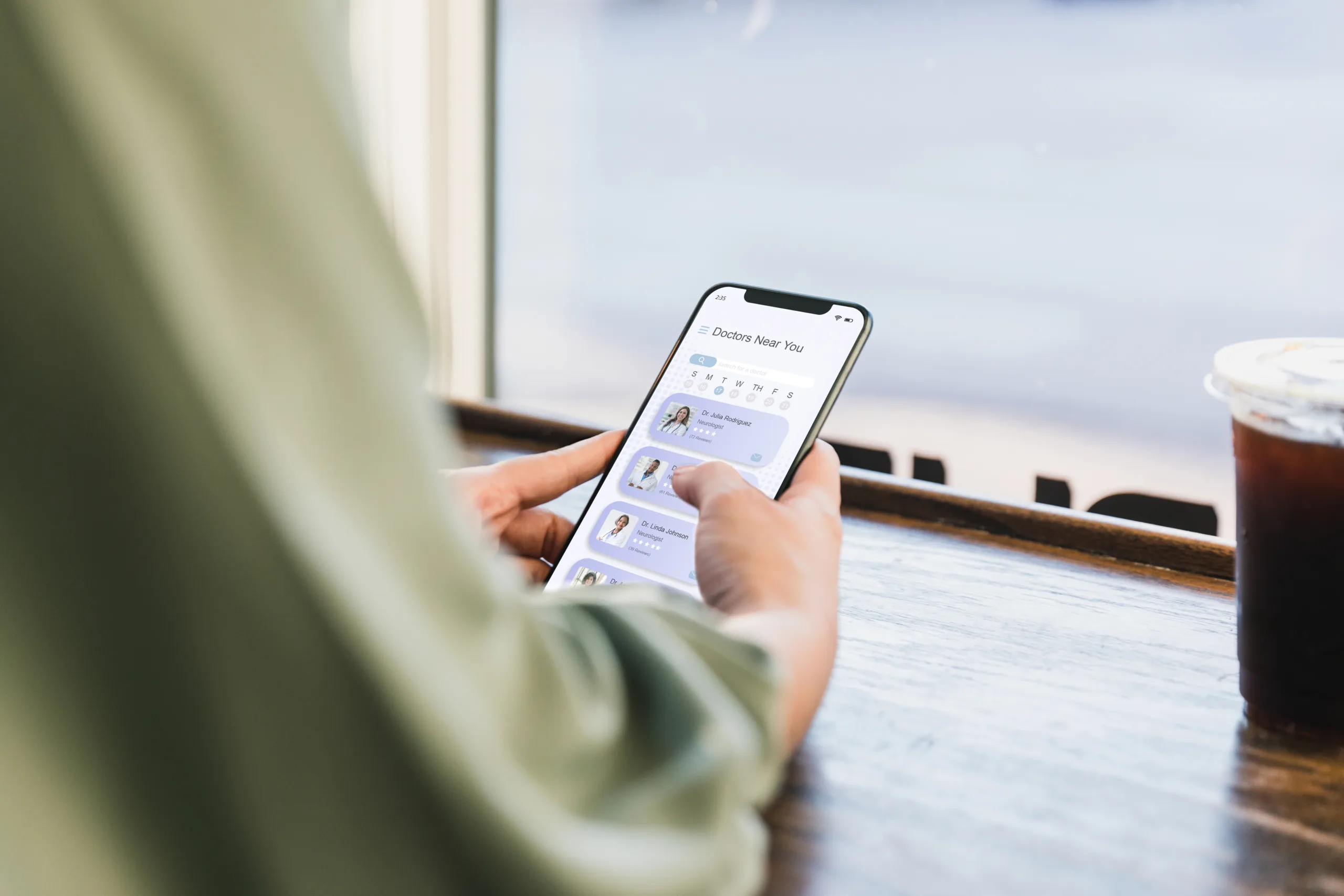
Your search bar isn’t getting patients booked. Here’s how to fix it.
Turn a symptom search into a booked visit.

Your PDM Was Built for 2010. Your Problems Are From 2026.
Keep every doctor’s page as current as the doctor.
Ready to talk?
See your UH demo site.
Built with your own providers and locations. No setup on your end.