Patient SEARCH + access
Patients type what they need into UH’s search bar. What they should see is an appointment.
A symptom typed into a health system website should return a provider with an open slot. Most patients see articles instead.
DexCare
·
4 min read
Your report

The UH access snapshot
How a patient finds and books care at UH today.
Key takeaways
- Patients bring plain-language symptoms to a health system’s search bar and get articles, PDFs, and prep instructions back instead of a provider with an open slot.
- Thousands of provider, location, and condition pages spread across many hospitals and maintained by different teams make results noisy and patient intent hard to read.
- DexCare Site Search matches what the patient means rather than the words they typed and ranks providers by real-time availability so the result is bookable on the spot.
- The 2026 University Hospitals Access Benchmark Report shows where UH’s first-visit wait times stand by specialty, how they compare nationally, and what patients see when they search the UH website for common care.
Patients type things into a health system’s search bar that they would never say aloud at a front desk, a symptom they’re embarrassed about or a worry they haven’t told anyone yet. A couple of seconds later the patient has seen the results and is either still on your site or on someone else’s.
Too often what comes back is a reading list. Type “sore right knee” and the results are an article about exercise, a PDF on meniscus recovery, and prep instructions for ACL surgery. The one thing missing is a clinician who could see the patient this week.
University Hospitals has set a public goal of getting a very high percentage of first appointments in under 10 days. The measure begins once a patient books. But before a patient gets there, they might type a symptom into the website’s search bar, get articles back, and end up closing the tab. That patient won’t appear in a wait-time report and may never appear in a clinic. Patients who skip the search bar usually learned that habit one unhelpful result at a time.
Why search fails on a health system website
The problems with health system search are rooted in the vast complexities of healthcare websites.
Most search boxes have only one job, which is to match a query to a product. But a health system website serves multiple audiences and functions. For a system spread across many hospitals and hundreds of outpatient locations, that means the search function must scroll through thousands of provider pages, location and service line pages, condition and symptom information, wellness articles, hospital visitation guidelines, and payment options before it can deliver a result. Each of those content types is structured differently, updated on varying schedules (or not at all), and owned by multiple teams across the organization.
Then there’s the intent problem, which is where site search has failed for years. Traditional provider data management (PDM) tools, the backbone of Find a Doctor queries, are structured by rigid keywords such as specialty name. Keywords work if a patient already knows they need to see someone in neurology or orthopedics. But if they have a stomachache and don’t know which provider to see, their search may turn up a list of GI specialists when all they needed was a virtual or urgent care visit with a primary care provider.
When search results go bad, patients see the wrong clinicians. Highly trained specialists work on cases an advanced practice provider could have seen this week, and the specialist’s next open slot moves further out for the patient who needed it. And health systems wonder why they’re turning away more patients than they’re attracting.
This is healthcare’s DoorDash Moment
AI is making search more personal and less rigid at a time when health system websites continue to be stuck in the 2010s.
A recent example is DoorDash, which rolled out its “Ask DoorDash” conversational search feature in June. It’s designed to help people find a tasty meal even when they don’t have a specific restaurant in mind. Customers can type in “affordable family dinner” or “vegetarian, not spicy” and Ask DoorDash generates the best options instantly, without people having to scroll through endless menus.
As people grow accustomed to more personalized searches in dining, retail, entertainment, and all other areas of life, they’ll expect the same from their healthcare providers.
Meet the moment with total site search that books
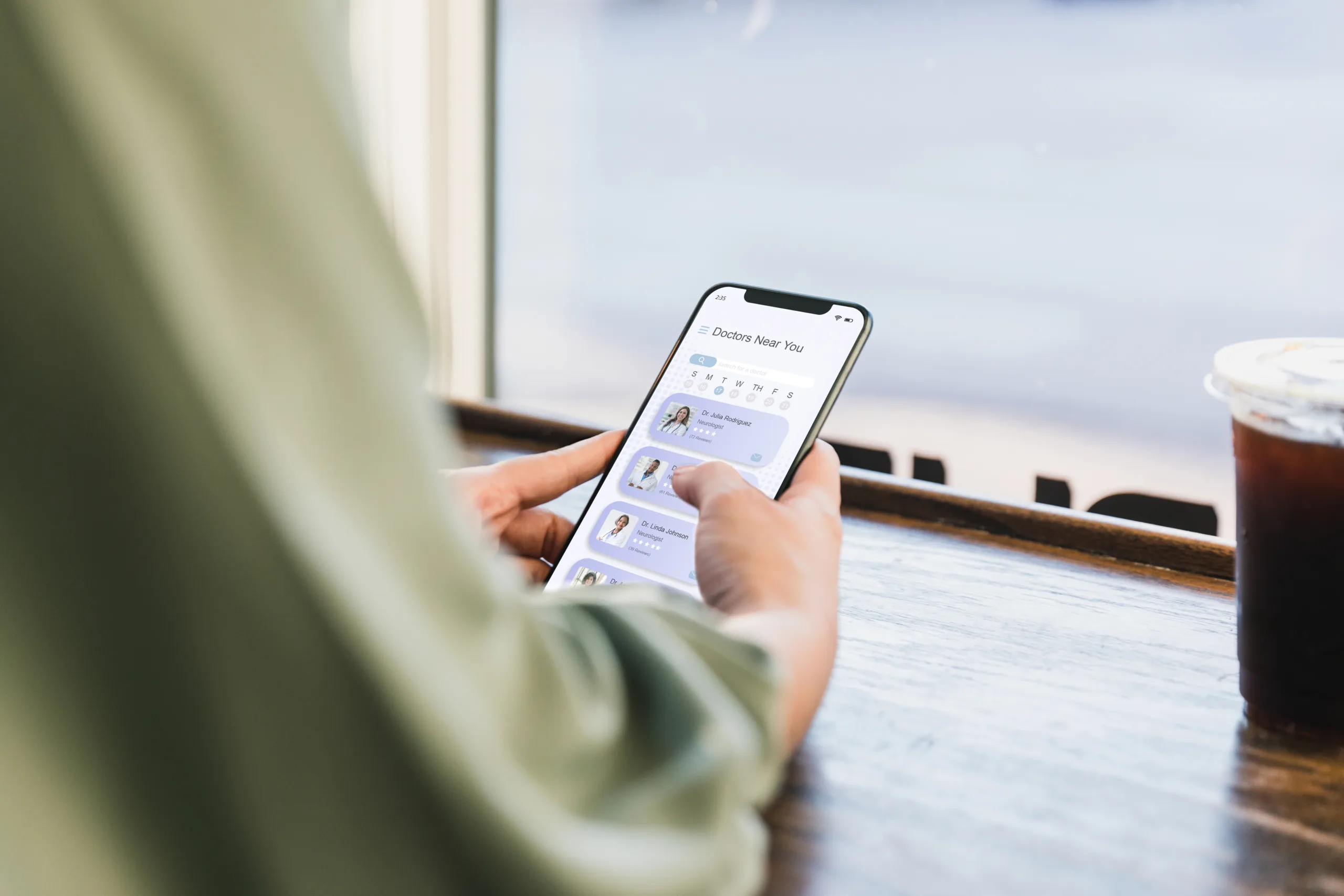
Site Search from DexCare gives total website search the makeover it deserves. It matches results using a built-in synonym library, so misspellings and synonyms return relevant answers. A search for “sore right knee” surfaces a list of providers who treat knee pain, based on the rules your system sets for where those patients should go. Results are ranked by real-time availability, and each result includes a bookable list of appointment times and dates. Patients can select the time that works best for them and enter the booking flow immediately, without having to log on to a patient portal.
Site Search lets health systems customize their patients’ digital experience. Website administrators have full control. They can choose which types of pages to surface, choose which results rank first, and tailor auto-suggest and auto-correct options to match how patients search for care. That control lets health systems make search results work for their goals, such as listing new providers looking to fill their panels first or promoting virtual options for low acuity care. Organizations can even create and embed a search widget on every website page, so search is no longer confined to the upper-right corner.
Beyond providers, Site Search allows health systems to customize all searchable content: pages, health articles, conditions, services, FAQs, events, news, PDFs, and locations can be enabled, ranked, and mapped to a health system’s unique web and content categories.
See where UH’s wait times stand today
DexCare examined UH’s public Find a Doctor pages and MyChart open scheduling tool in late September and early October 2026 to see how close each specialty is to the 10-day goal. Several are already there. Others have further to go, and the report lays out five moves for getting the rest of the way, including what patients see in the first 10 results when they search uhhospitals.org for 10 common care needs.
The 2026 University Hospitals Access Benchmark Report compares UH’s wait times with national averages and shows where to go next.
Download the 2026 University Hospitals Access Benchmark Report .
More reading for UH
Dive deeper.

The 10-Day Promise Every Health System Should Make
Bryce McGee on how UH can meet its access goals.

How UH Can Extend Urgent Care Access to Specialty Care
See how to cut wait times and lift bookings.

We Tested Patient Access at University Hospitals. Here’s What We Found.
UH has an opportunity to make the access experience even better.

How UH Can Win Patient Searches in Google and AI
How to be the answer in Google and AI.

Is UH’s Scheduling Logic Keeping Up With Its 10-Day Goal?
One governed layer of provider data and scheduling rules across every channel could close the gap.

After Epic consolidation, UH’s next payback is on access.
What the EHR can’t do.

How to Reduce Patient Wait Times: Operational Strategies for UH
Shorter waits start with scheduling logic, not staffing.
Your search bar isn’t getting patients booked. Here’s how to fix it.
Turn a symptom search into a booked visit.

Your PDM Was Built for 2010. Your Problems Are From 2026.
Keep every doctor’s page as current as the doctor.
Ready to talk?
See your UH demo site.
Built with your own providers and locations. No setup on your end.