

Smart Scheduling
The booking that can’t be wrong.
Your patient is ready to book. Smart Scheduling takes it the rest of the way. AI checks the provider’s rules while the patient books, ensuring a correct visit. Right patient, right visit, right provider.
Smart Scheduling checks the rules while the patient books, ensuring a correct visit. Right patient, right visit, right provider.
Not sure? See what to expect.
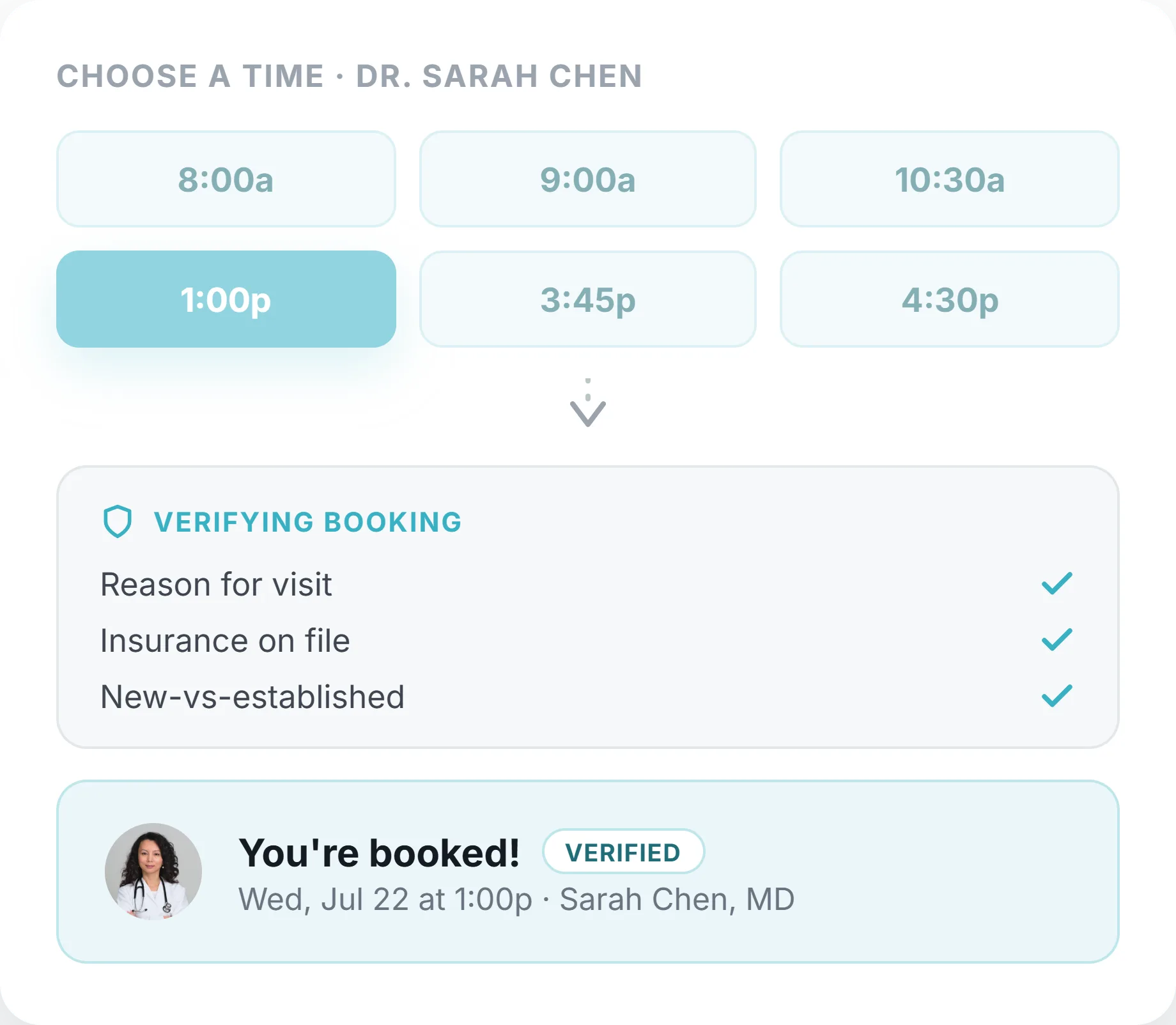
checkout funnel
From search to confirmation.
Search. Book.
Acquire, Site Search, and Find a Doc get a patient to a time slot. Booking is the checkout funnel that confirms it. Fewer steps between selection and confirmation means fewer drop offs.
Acquire, Site Search, and Find a Doc get a patient to a time. Booking confirms it. Fewer steps means fewer drop offs.
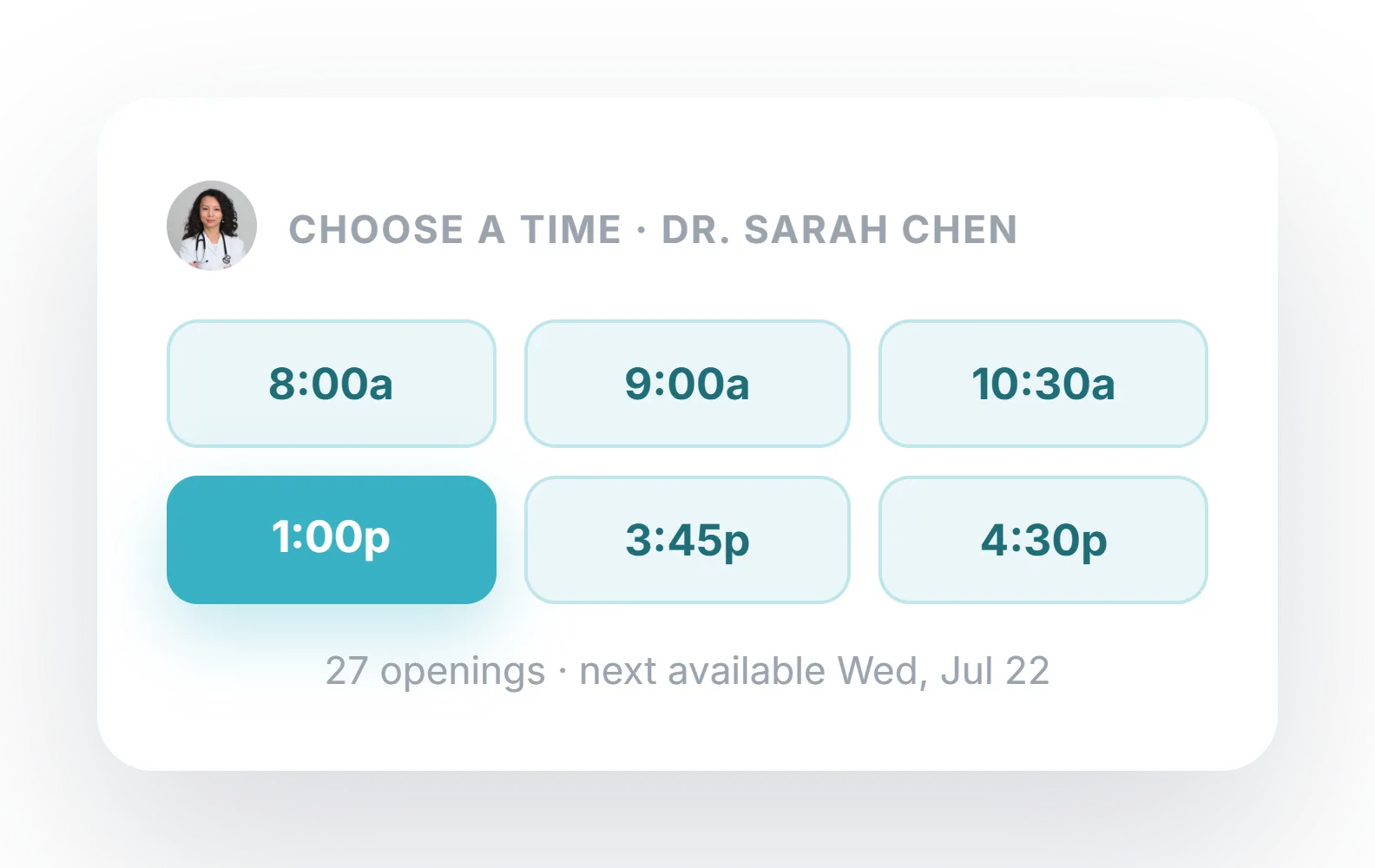
1. Choose a time
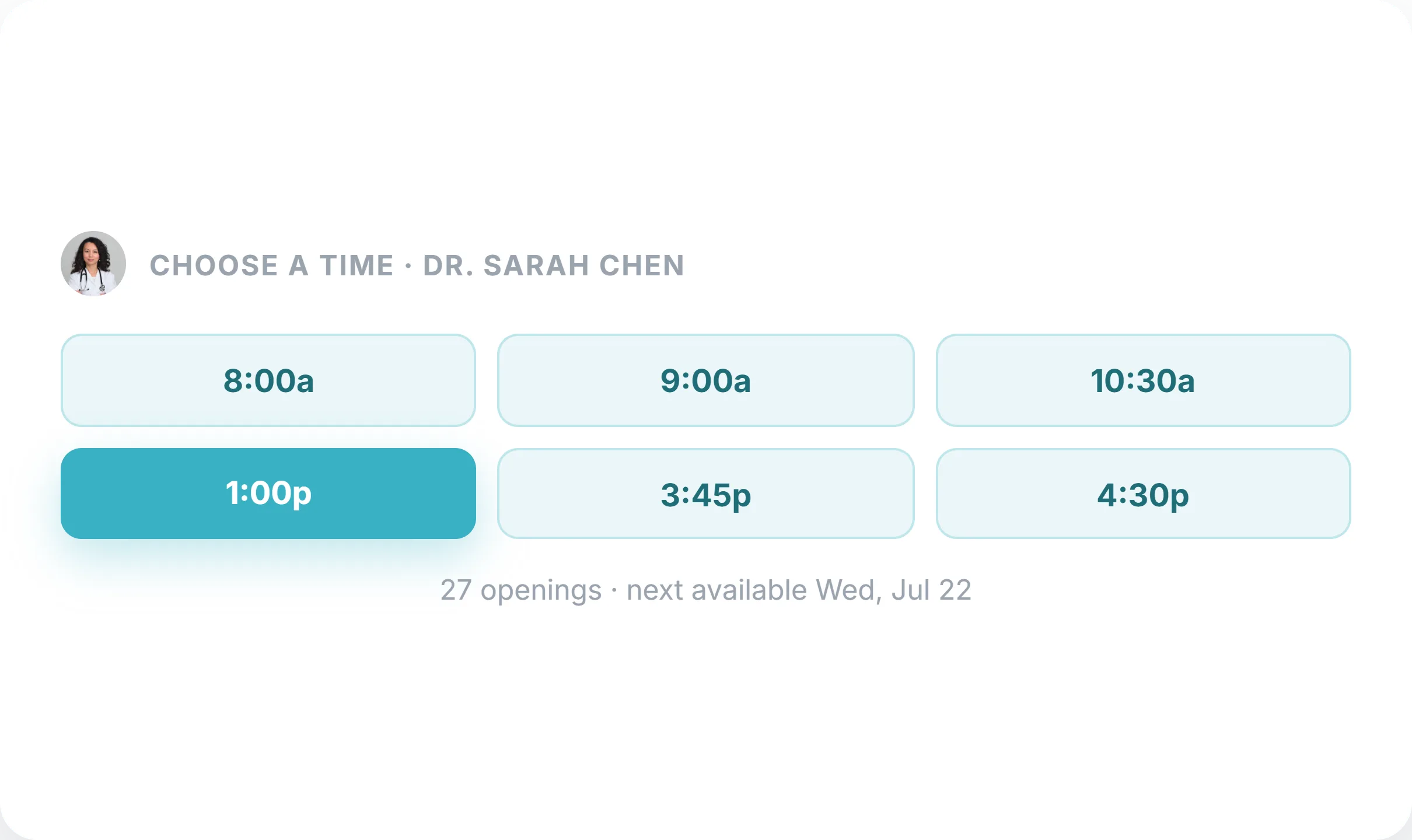
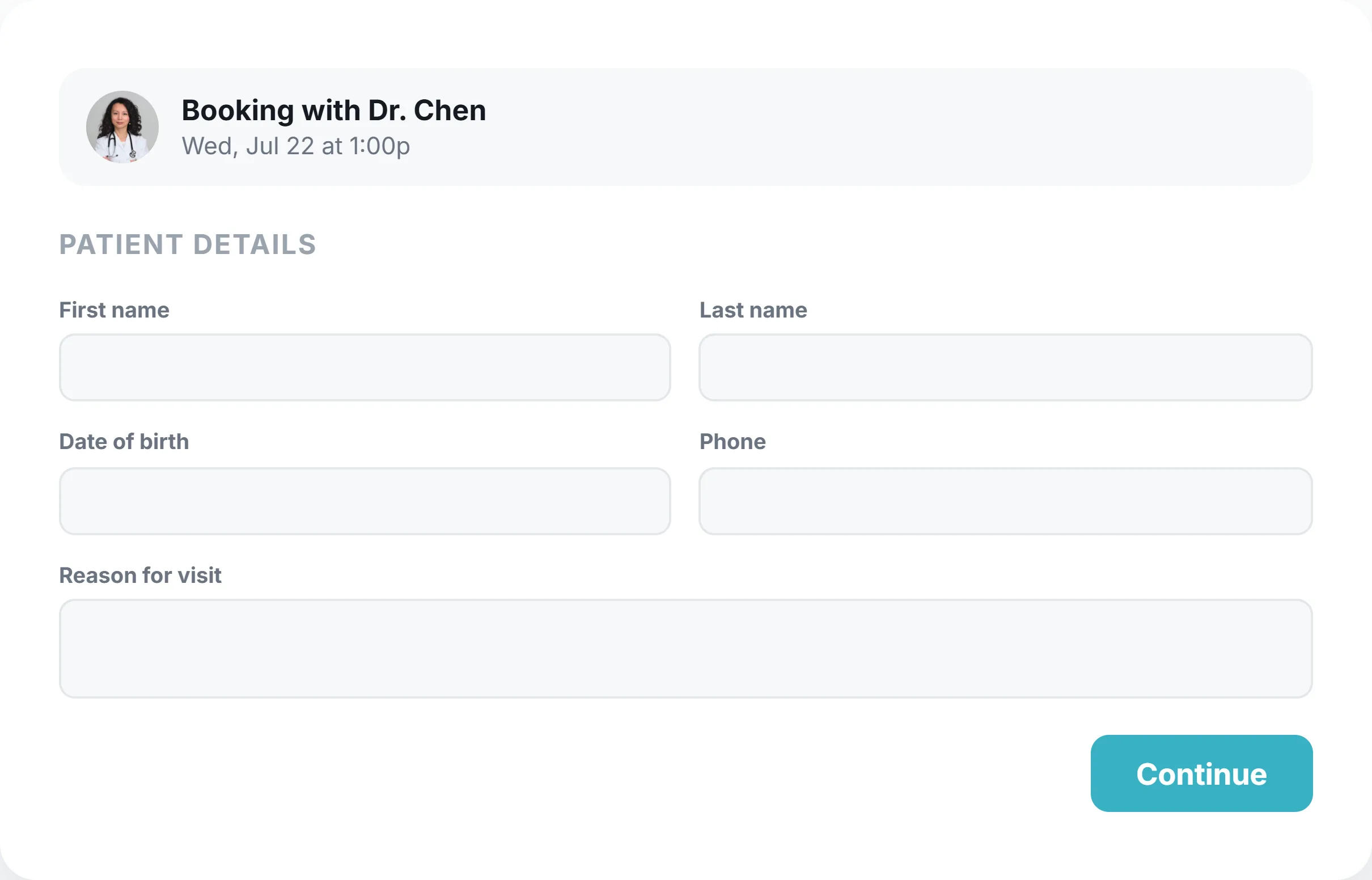
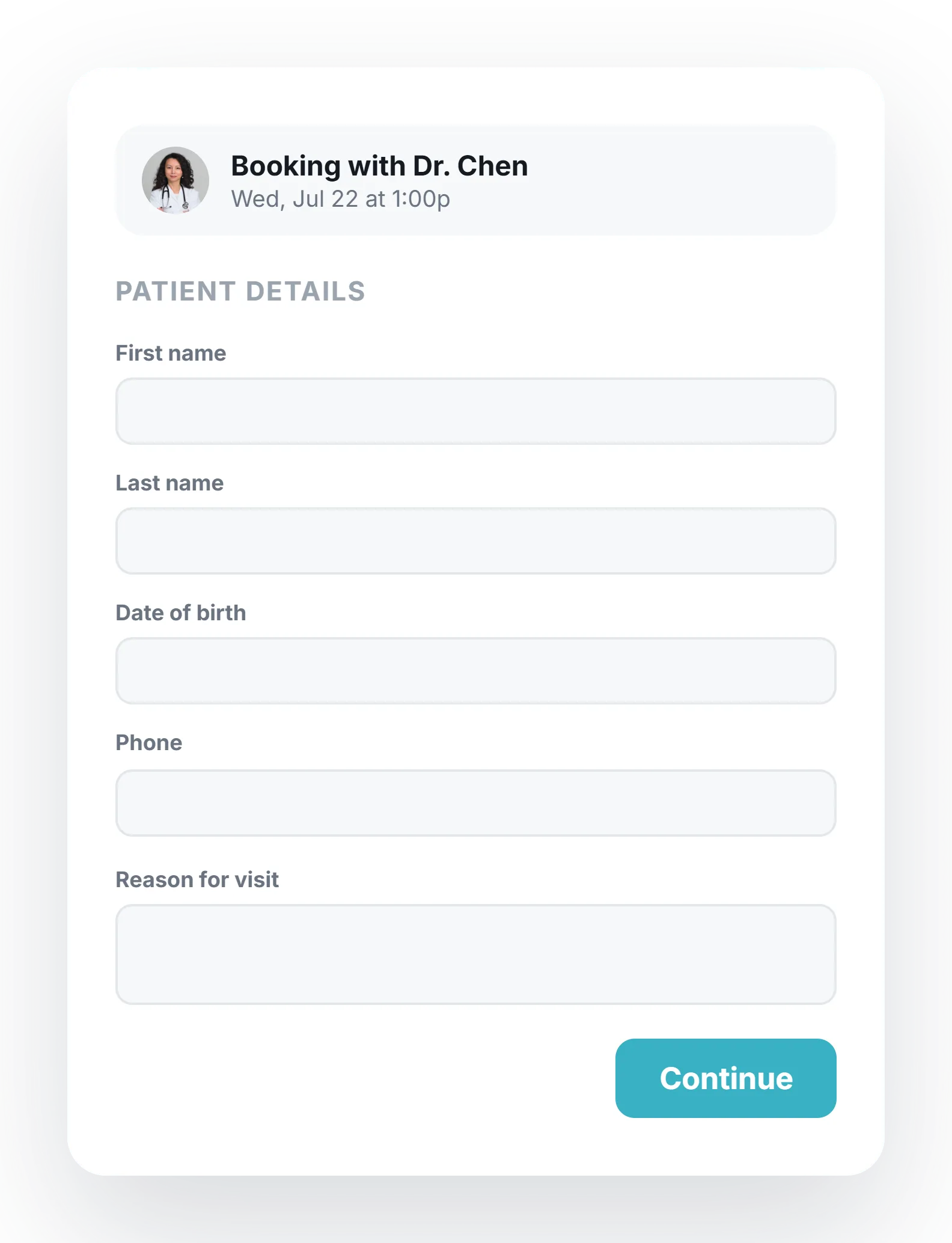
2. Patient Details
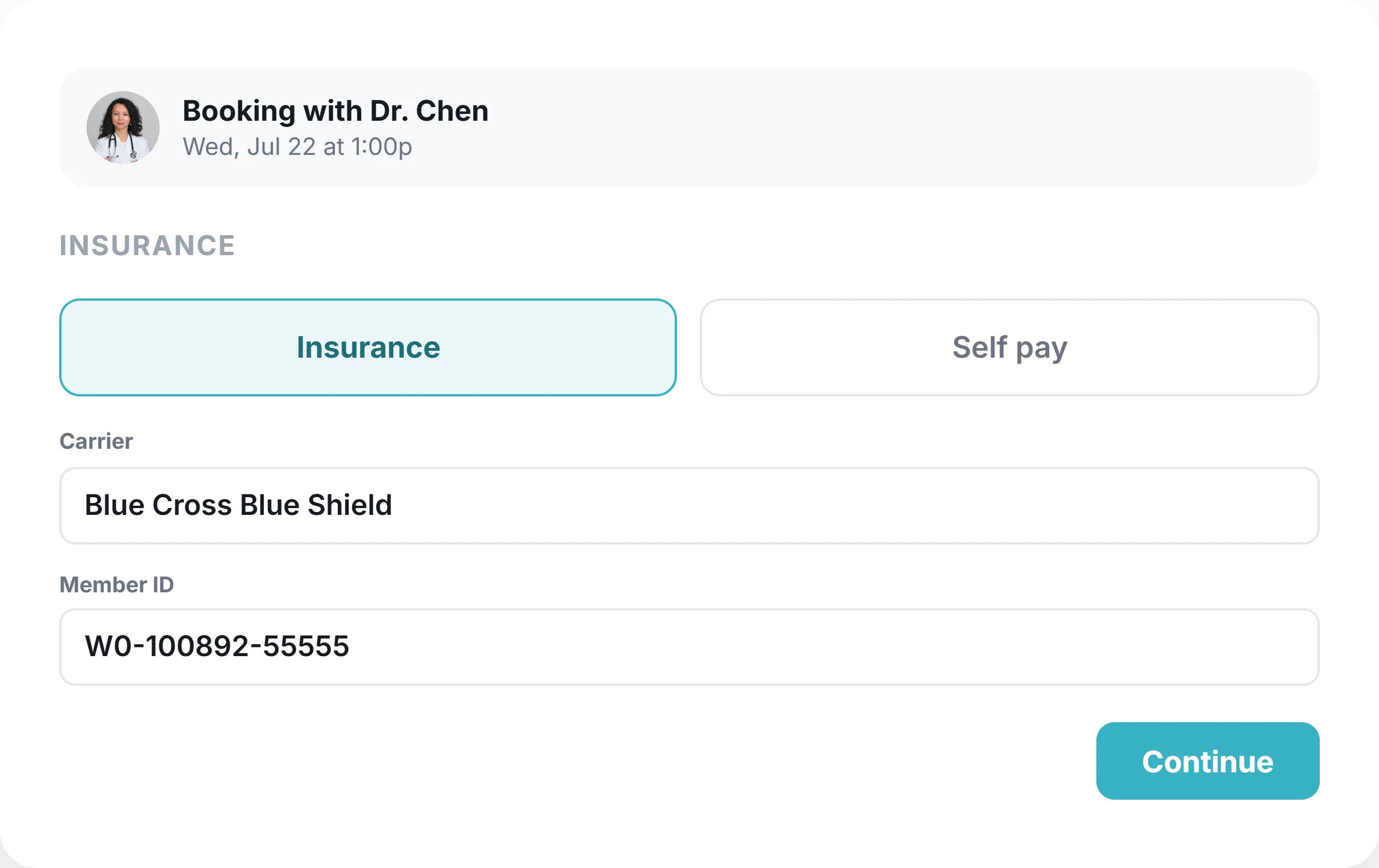
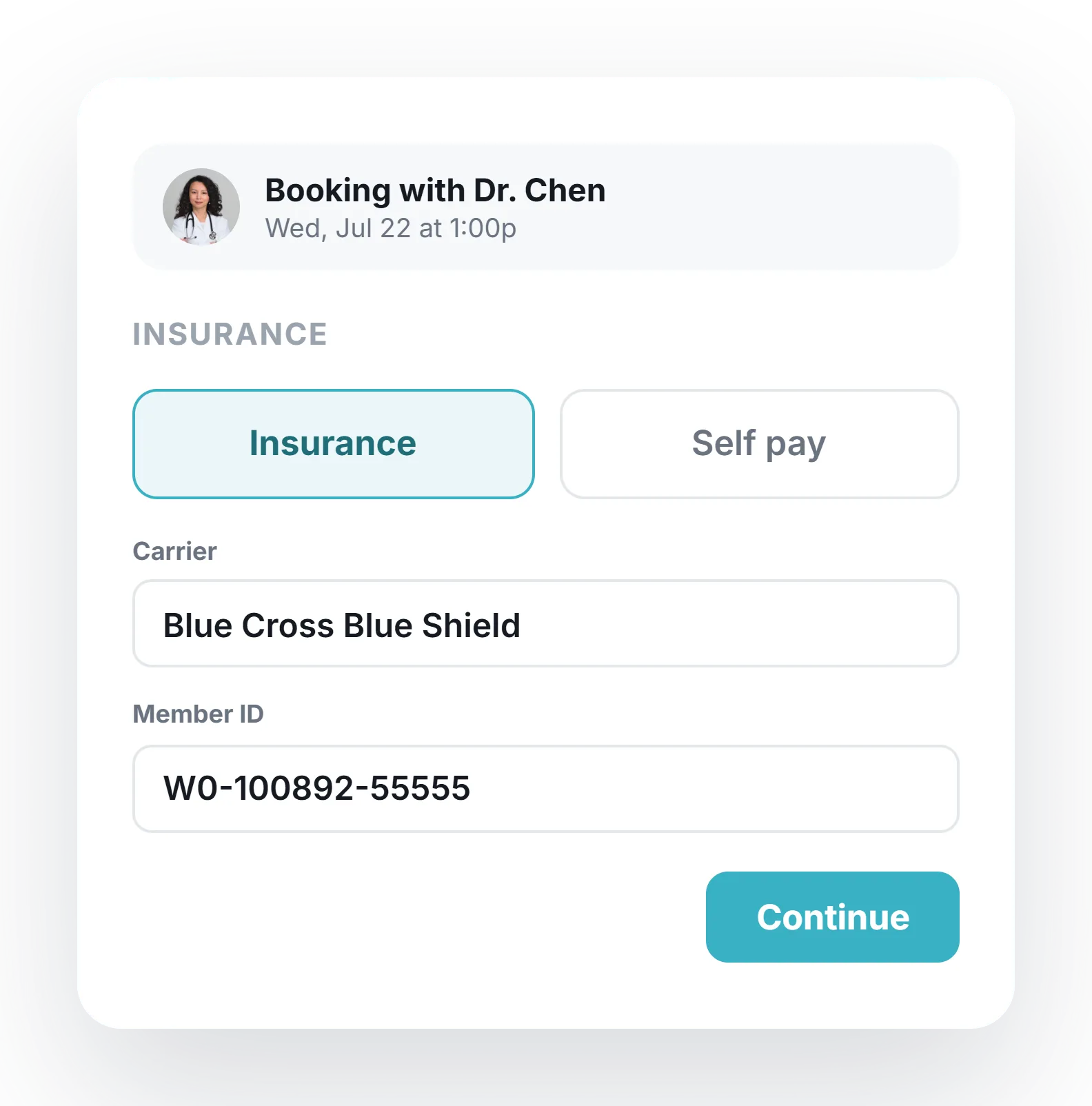
3. Insurance
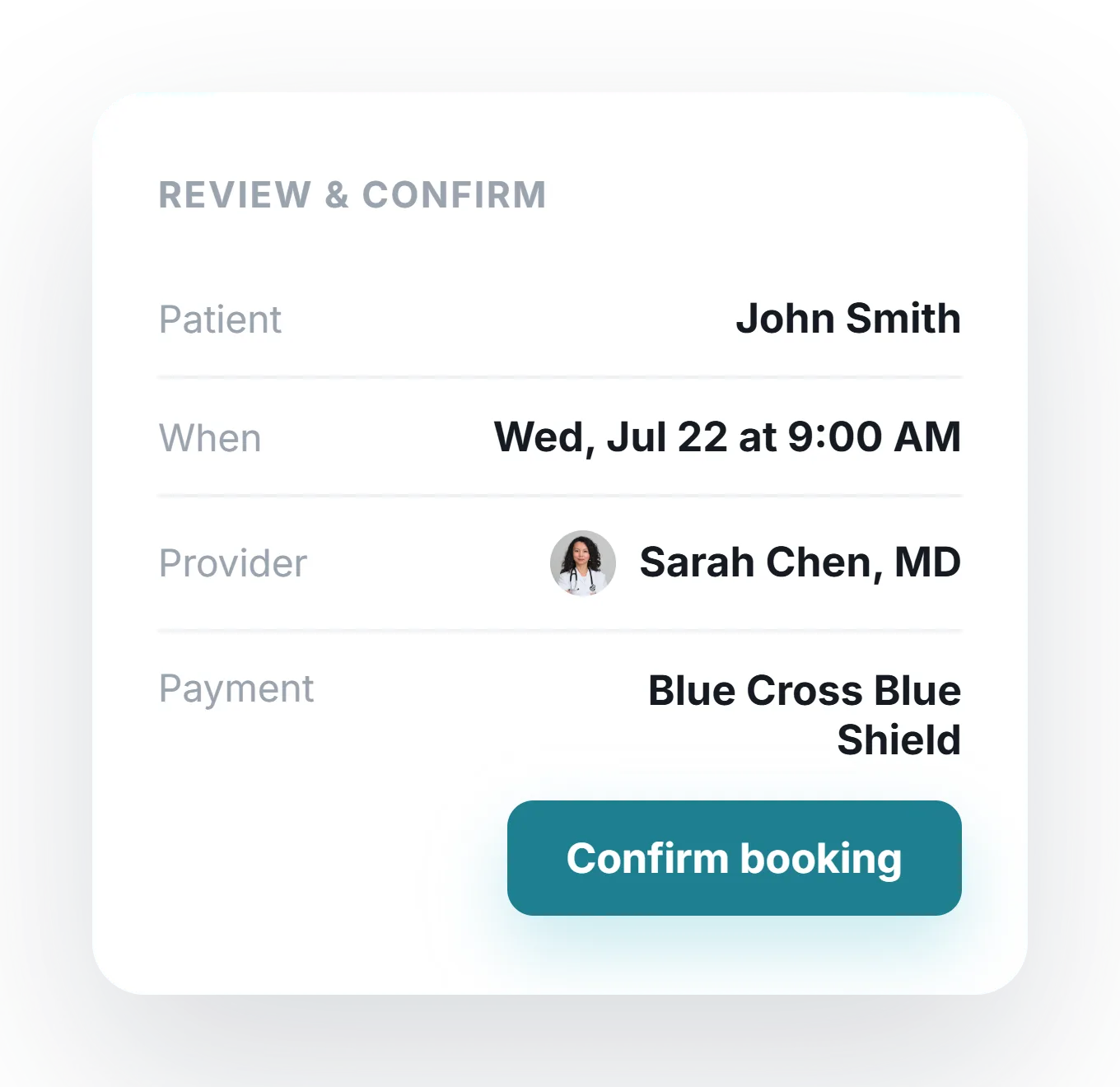
4. Review
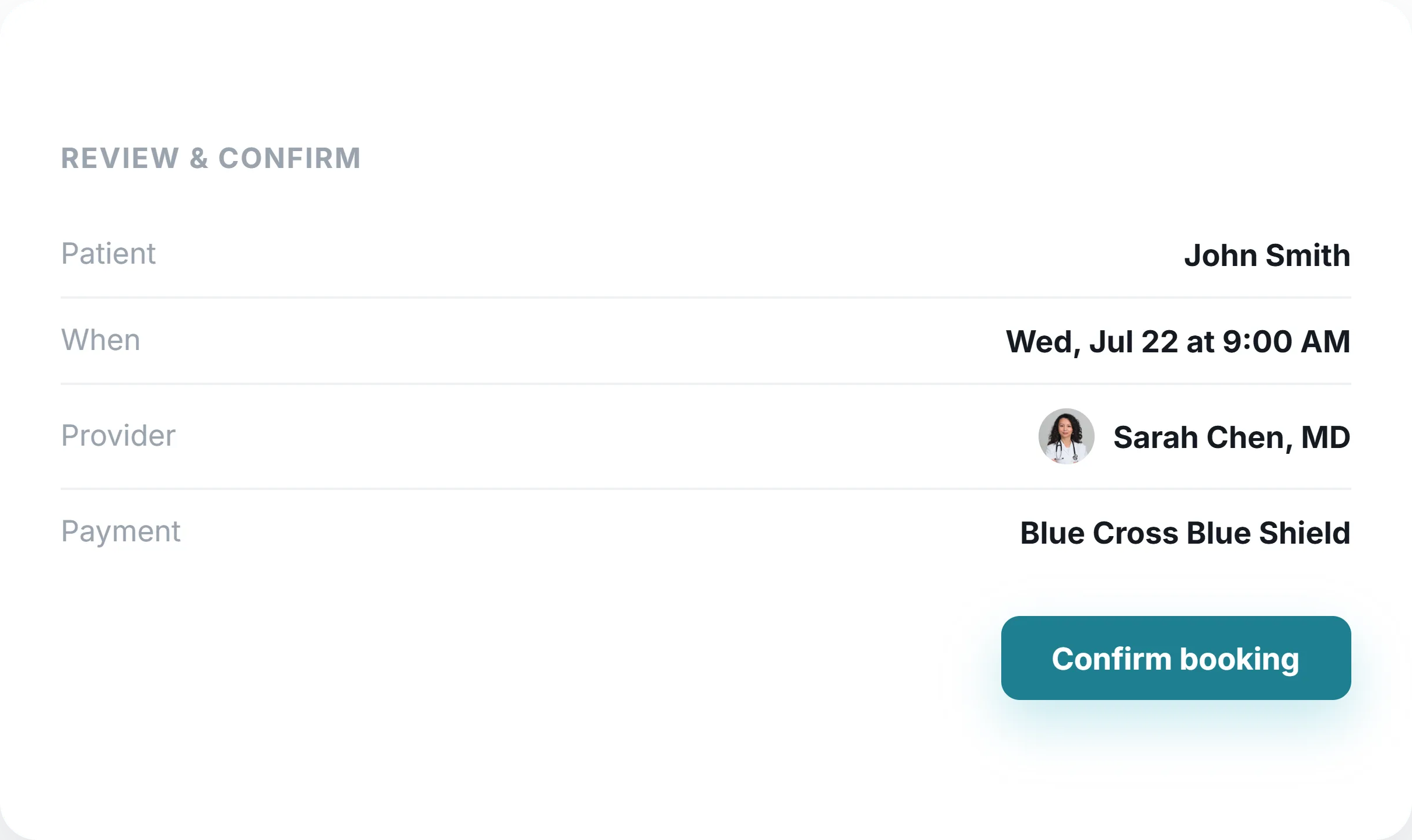
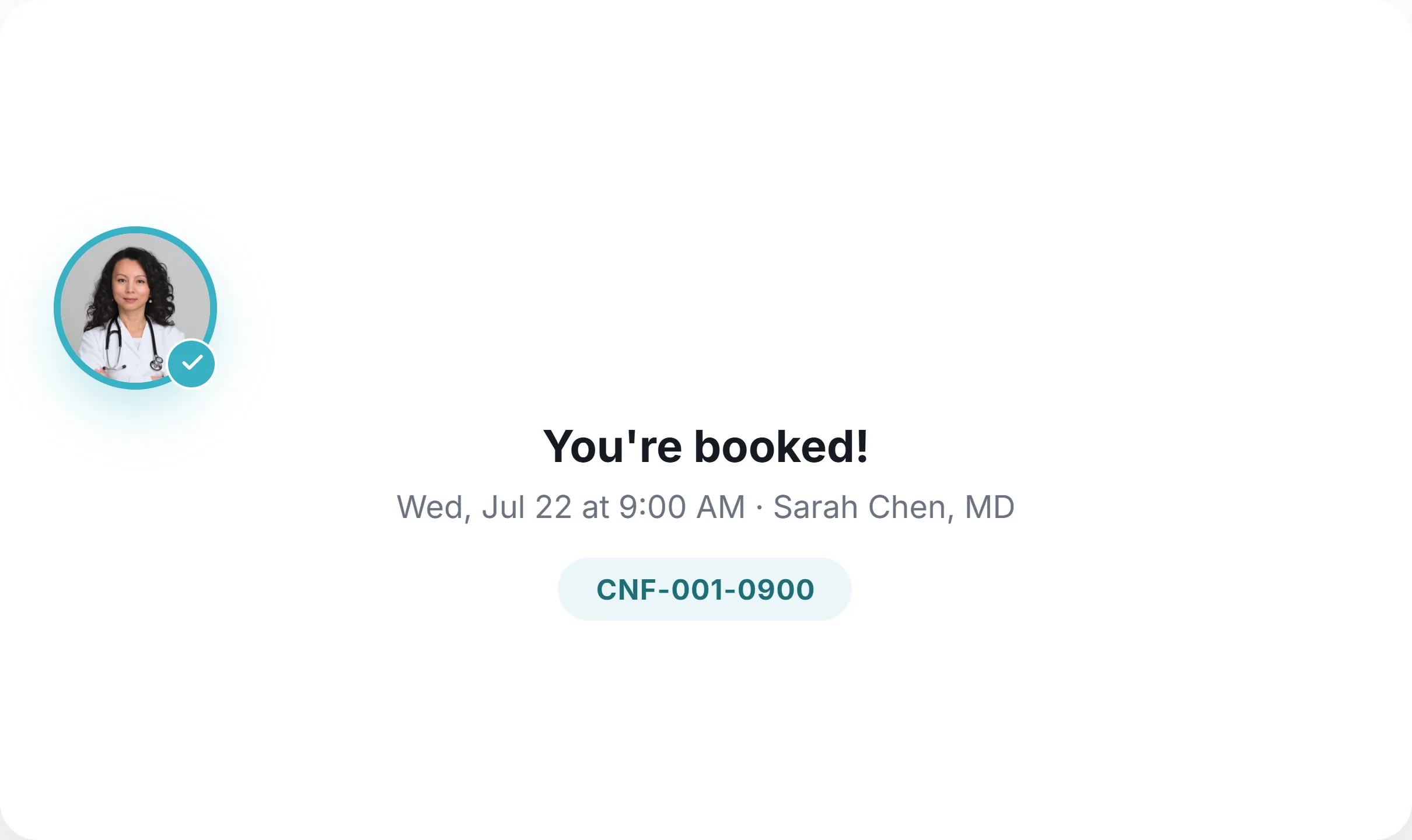
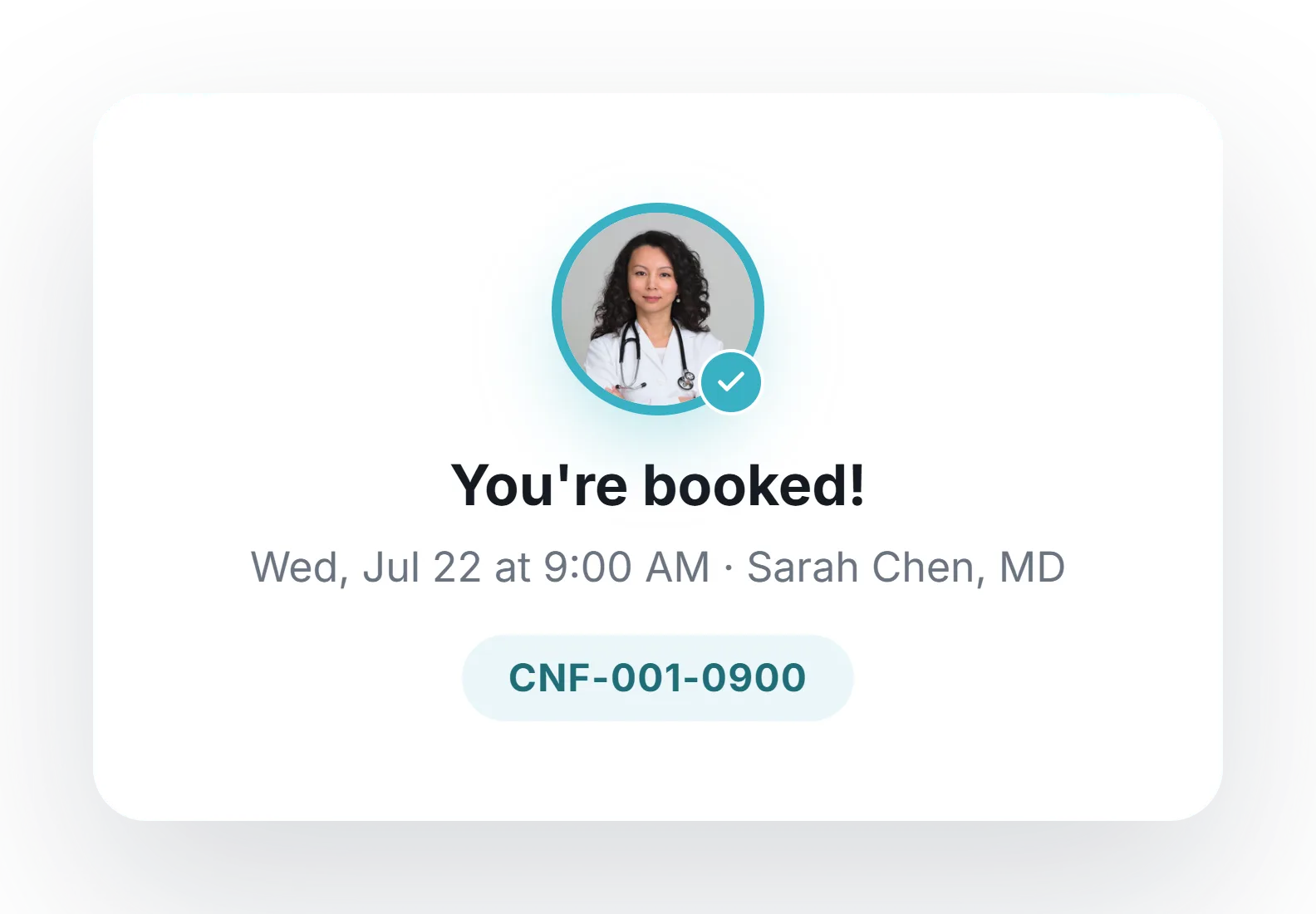
5. Confirmed
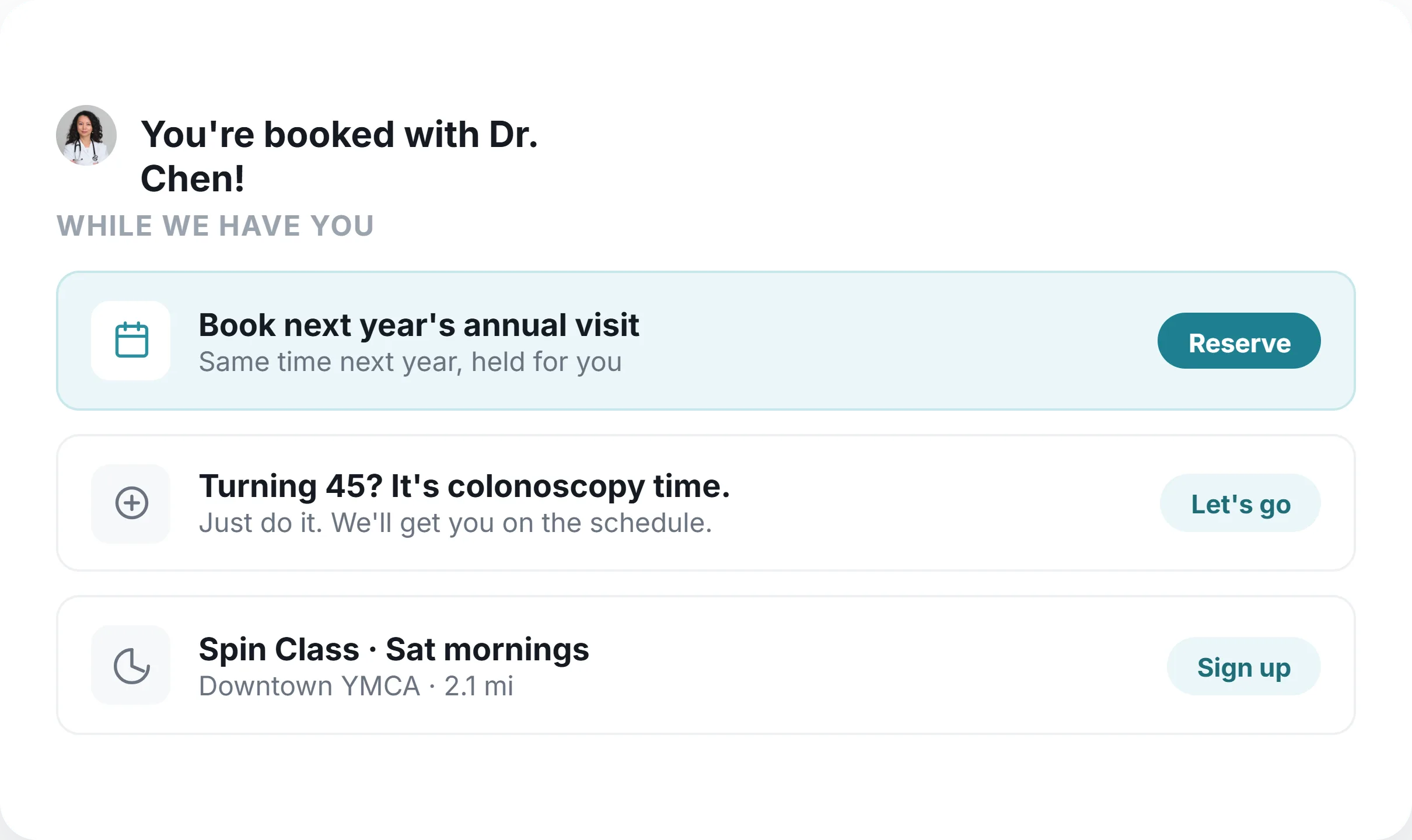
6. Engage
Choose a time
Patient Details
Insurance
Review
Confirmed
Engage
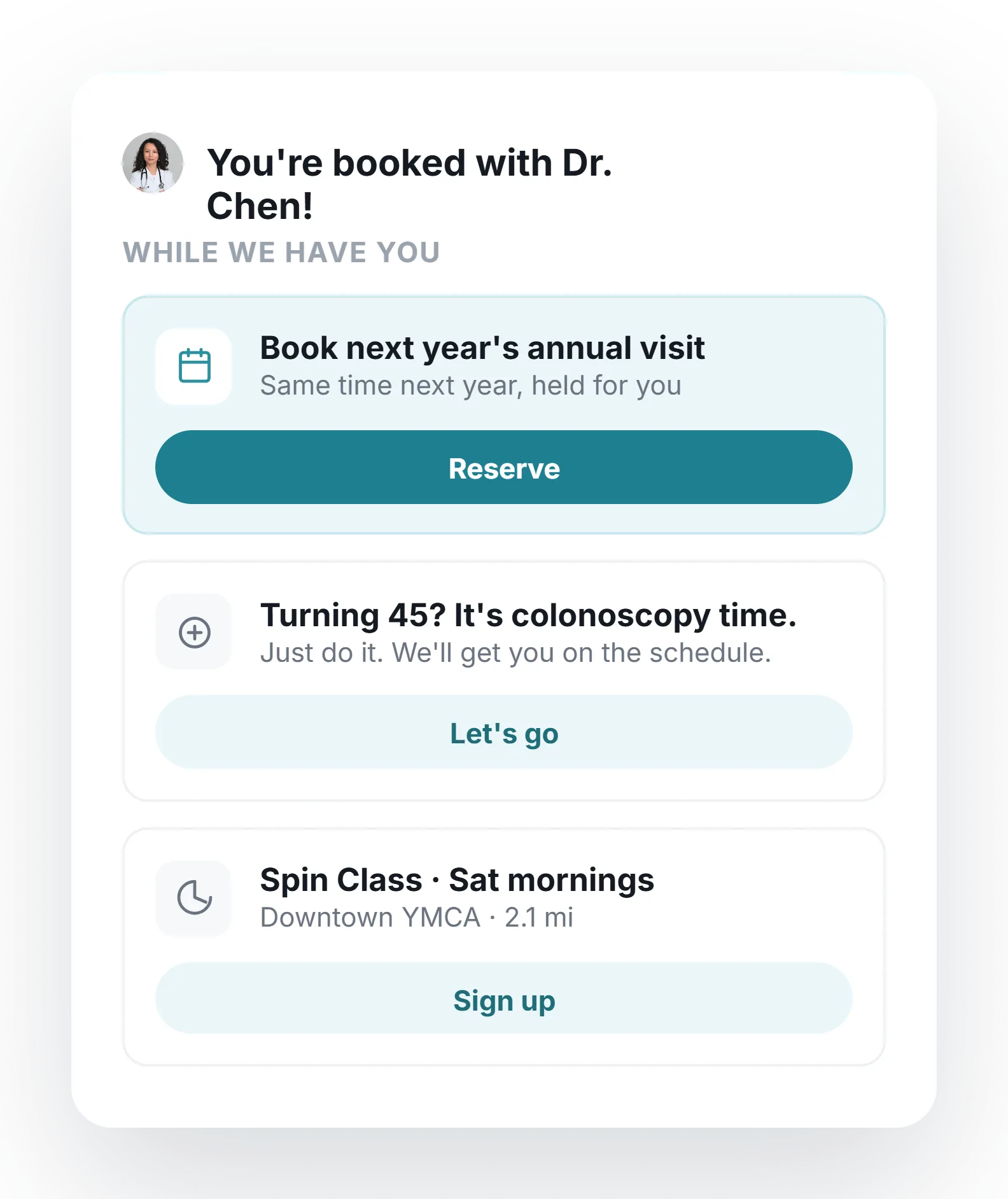
Auto matching
Bookings matched to the best fit.
01
Read the request
Reason for visit, location, and insurance considered together, not just an open slot.
02
Match the resource
Specialist, PA, or agnostic capacity, whichever gets the right care fastest.
03
Confirm correctly
The checkout funnel verifies patient, provider, and time before the visit is booked.
Verifies patient, provider, and time before the visit is confirmed.
Returning patient
Skip the form.
Skip the form.
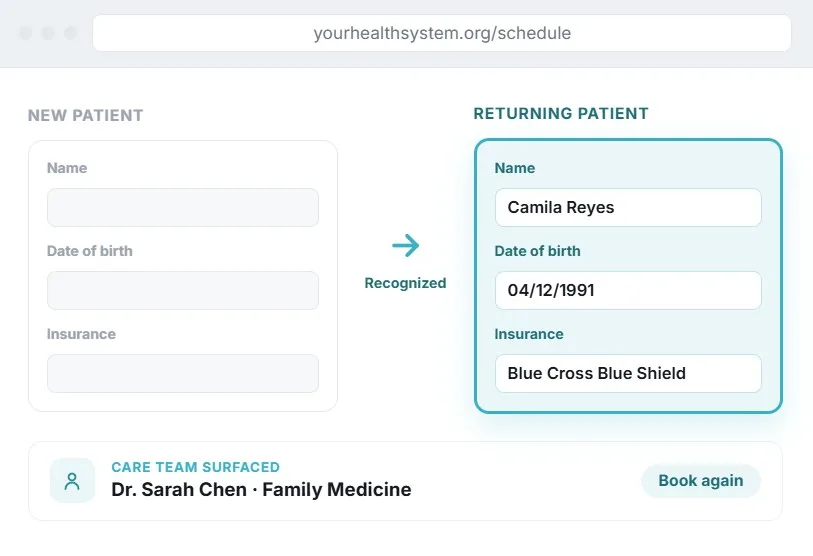
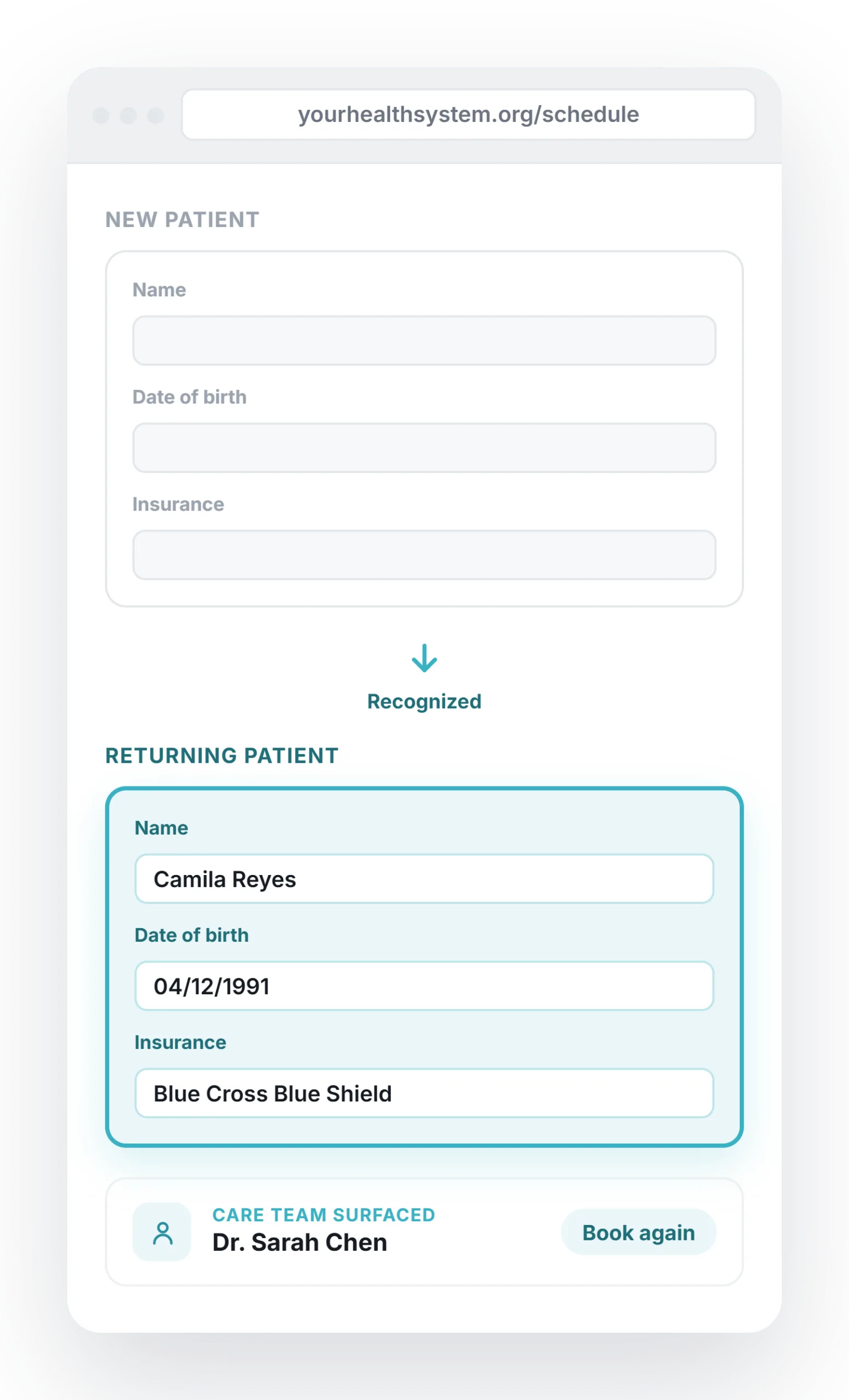
When a patient is signed in, their care team surfaces first. Demographics and insurance pre-fill the booking form. Fewer fields, fewer drop-offs, the same live availability underneath.
When a patient is signed in, their care team surfaces first and their information is pre-filled. Fewer fields, fewer drop-offs, the same availability underneath.
01
Recognition
Matched via MyChart SSO in the background. No name, DOB, or insurance card to retype.
Matched via MyChart SSO in the background.
02
Care team
Last provider and location pre-selected. Unavailable? Backups are ranked by relationship, not just next open slot.
Last provider pre-selected—backups are ranked by relationship.
03
Pre-fill
Only asks what changed since the last visit—a new symptom, a new plan—never a blank form.
Only asks what changed since the last visit, never shows a blank form.
04
Availability
Pulled from the same live inventory staff schedulers use, so nothing double-books or goes stale.
Pulled from the same live inventory staff schedulers use.
AI verification
Catch mismatches before they become an issue.
Resolve issues live.
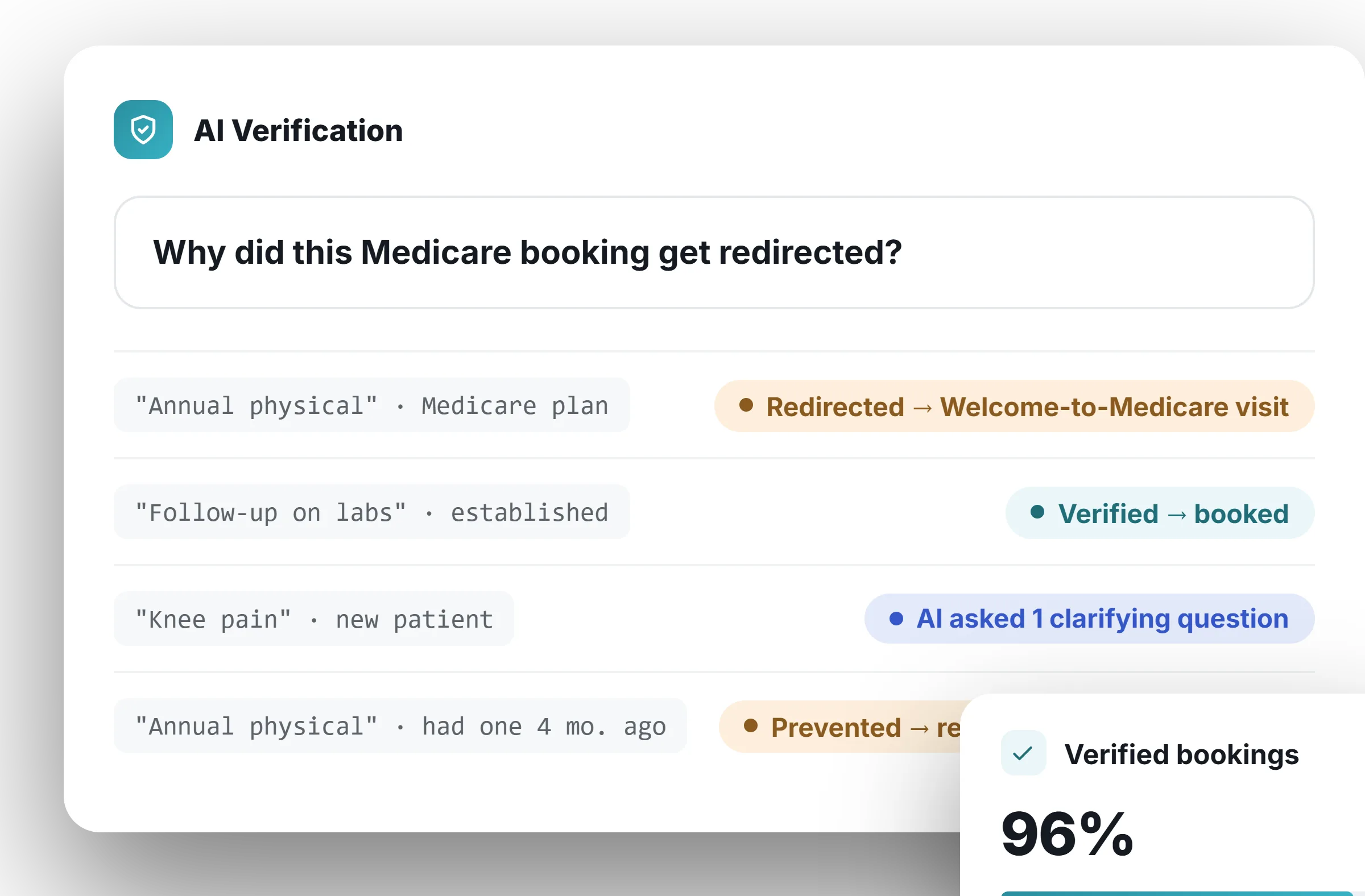
AI checks the provider’s preferences—reason for visit, insurance, status, and availability—during booking. Verify, redirect, clarify, or prevent.
AI checks the provider’s preferences—reason for visit, insurance, status, and availability—during booking.
How it works
Verification. Invisible until it’s needed.
Invisible verification until it’s needed.
1 · The patient experience
Standard flow
Demographics, insurance, and reason for visit. The familiar flow, unchanged.
Demographics, insurance, and reason for visit. The familiar flow.
2 · Confirm each step
Constraints checked live
Visit-type rules, insurance, and status, checked against the provider’s constraints.
3 · In-flow resolution
No dead ends
Proceed, redirect to the right visit type, or ask one clarifying question—never a dead end.
4 · The booking sticks
Right the first time
Appointments are right, and the same AI is portable to search and post-discharge scheduling next.
The hidden cost
Wrong bookings are not just a nuisance.
Every appointment booked as the wrong visit type triggers the expensive version of scheduling: staff call-backs, rework, a wasted slot, and a patient who starts the visit annoyed.
Every wrong visit type triggers the expensive rescheduling: call-backs, rework, a wasted slot, an annoyed patient.
Margin lever · labor
Retire scheduler rework
Mismatches get caught while the patient books, not by your staff two days later. That’s scheduler labor returned, at volume.
Mismatches get caught during booking, not by your staff days later.
Margin lever · Capacity
Reclaim wasted slots
A slot held by a bad booking is capacity you paid for and can’t use. Verification keeps real demand in every opening.
A wasted slot is wasted budget. Verification keeps real demand in every opening.
Margin lever · conversion
Fix it early, keep the patient
Eligibility issues surface as the patient types, not after later. Redirected patients stay and book the right visit.
Issues surface immediately. Redirected patients stay and book the right visit.
of bookings are new patients
commercially-insured patients
0
bookings blocked by AI downtime
For IT teams
Built to be boring.
Verification adds intelligence without adding operational burden.
Fails open, always
If the AI is slow or down, booking proceeds. No patient is ever blocked.
One provider at a time
Feature-flag gated. Turn it on per provider or clinic. Off just as fast.
Reads your EHR’s truth
Uses the EHR’s own new-vs-established check. No shadow patient status.
Zero net workload
A managed service on your existing integration. No new endpoints to run.
Drop the booking flow into your next page.
Not ready to talk? We got you. Enter your health system URL and we’ll build you a live, interactive demo — your brand, your providers. Clickable. And in your inbox. Take it for a test drive.
Not ready to talk? Enter your health system URL and get an interactive demo. Your brand, your providers, all clickable.
Not sure? See what to expect.

Your URL
2
Your Details
3
Demo Ready
Where should we send your demo?
Add your details and we’ll build your environment, then email a private link to launch it.
Demo in Review
We’re putting the finishing touches on your demo.
Our team is reviewing your environment to make sure your providers, specialties and locations look just right. you’ll get a private link by email — usually within one business day.
We’ll send your customized demo to the email provided.
Questions? Just reply to that email.