
AI Agents Buying Guide
- Your front desk can’t answer every call and work every list.
- After five o’clock, patients reach voicemail.
- Overdue recalls and open referrals sit untouched in the EHR.
- Patients stop partway through care and never rebook.
- This guide shows what an AI scheduling agent should do about it, with a 7-question scorecard to evaluate one.
Get the playbook
The phone, staffing and follow-through gaps independent practices face every day
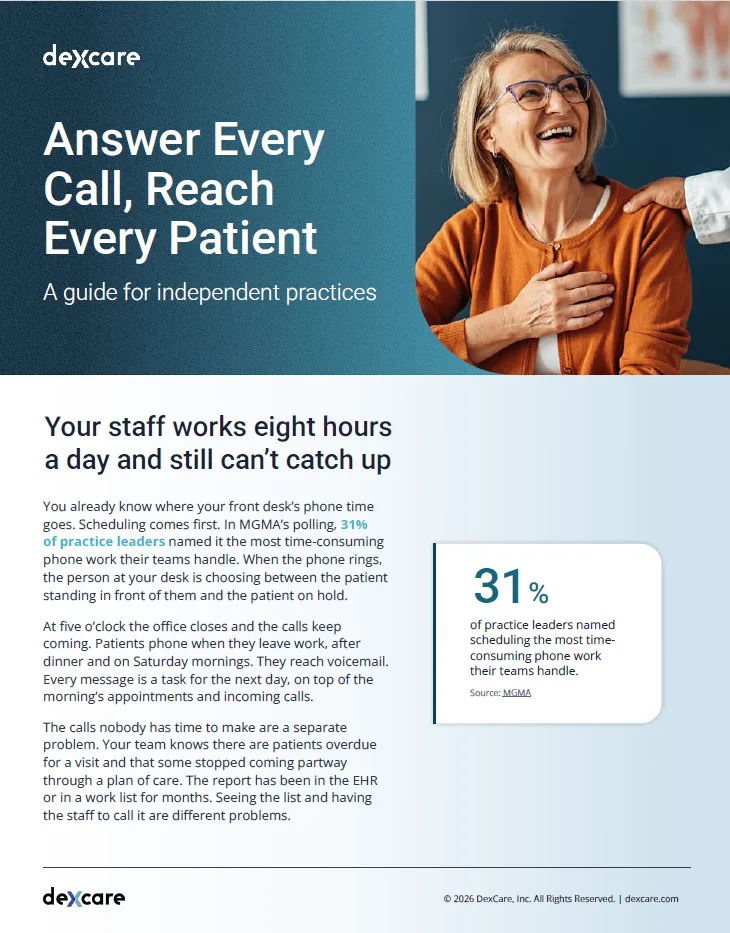
of practice leaders say scheduling is their team’s most time-consuming phone work
front office support turnover, so each new hire learns scheduling rules from scratch
of physical therapy patients completed their prescribed 20 sessions

A sneak peek
What’s inside
Choosing an AI Agent You Can Trust
Your front desk juggles daytime calls, after-hours voicemail and an outbound list nobody reaches. See how one AI agent can take on all three by voice, chat or text.
Learn what makes an agent trustworthy. It should verify coverage during the call, book from your approved rules and show why every patient went where they did.
The guide closes with a toolkit. Use it to measure your unanswered calls and idle demand, then score any AI agent against seven questions before you sign.
Key Insights
Five O’Clock Doesn’t Stop Demand
Patients call after work, after dinner and on Saturday mornings. An agent that books during the conversation means nobody spends the next morning returning voicemails.
Your Growth Is Already in the EHR
Overdue recalls, open referrals, a stale waitlist and due screenings are demand you already have. Across Mila outreach, 54% of patients respond and 18% convert after a referral.
Most Drop-Offs Never Cancel
In one study, PT patients who stopped averaged six visits and never booked the seventh. An agent that keeps context can rebook them where they left off.

Ready to give it a read?
Score any AI agent before it touches your schedule.