
Patients type things into your website’s search bar that they’d never say aloud in a waiting room. A symptom they’re embarrassed about. A fear they haven’t told anyone yet. And most of the time, what comes back has nothing to do with what they needed.
Too often, the health system search bar is barely visible, tucked into the upper-right corner of the homepage like an afterthought. Type in “sore right knee” and you get a laundry list of disconnected information back. An article about exercise. A PDF on recovering from a torn meniscus. Prep instructions for ACL surgery. Everything except what the patient truly needed in that moment —a clinician who could treat their symptoms.
Patients aren’t ignoring search because they can’t find it. They bypass it because it’s unhelpful.
It’s not your fault. But it’s yours to fix.
The problems with health system search are rooted in the vast complexities of healthcare websites.
Most search boxes have only one job: match a query to a product. But a health system website serves multiple audiences and functions. That means the search function must scroll through thousands of provider pages, location and service line pages, condition and symptom information, wellness articles, hospital visitation guidelines, and payment options — all before it can deliver a result. Each of those content types is structured differently, updated on varying schedules (or not at all), and owned by multiple teams across the organization, adding to the chaos.
Then there’s the intent problem, which is where site search has failed for years. Traditional provider data management (PDM) tools, the backbone of Find a Doctor queries, are structured by rigid keywords such as specialty name. That’s great if a patient already knows they need to see someone in neurology or orthopedics. But if they have a stomachache and don’t know which provider to see, their search may turn up a list of GI specialists when all they needed was a virtual or urgent care visit with a primary care provider.
When search results go bad, patients see the wrong clinicians. Highly trained specialists work on cases that an advanced practice provider could handle. And health systems wonder why they’re turning away more patients than they’re attracting.
This is healthcare’s DoorDash Moment
AI is rapidly making search more personal and less rigid at a time when health system websites continue to be stuck in the 2010s.
A recent example is DoorDash, which rolled out its “Ask DoorDash” conversational search feature in June. It’s designed to help people find a tasty meal even when they don’t have a specific restaurant in mind. Customers can simply type in “affordable family dinner” or “vegetarian, not spicy” and Ask DoorDash generates the best options instantly, without people having to scroll through endless menus.
As people grow accustomed to more personalized searches in dining, retail, entertainment, and all other areas of life, they’ll expect the same from their healthcare providers. The question is, can your health system deliver?
See it live
What would DexCare look like on your site?
Drop in a real symptom search and watch it find the right provider, styled in your brand, in seconds.
Meet the moment with total site search that books
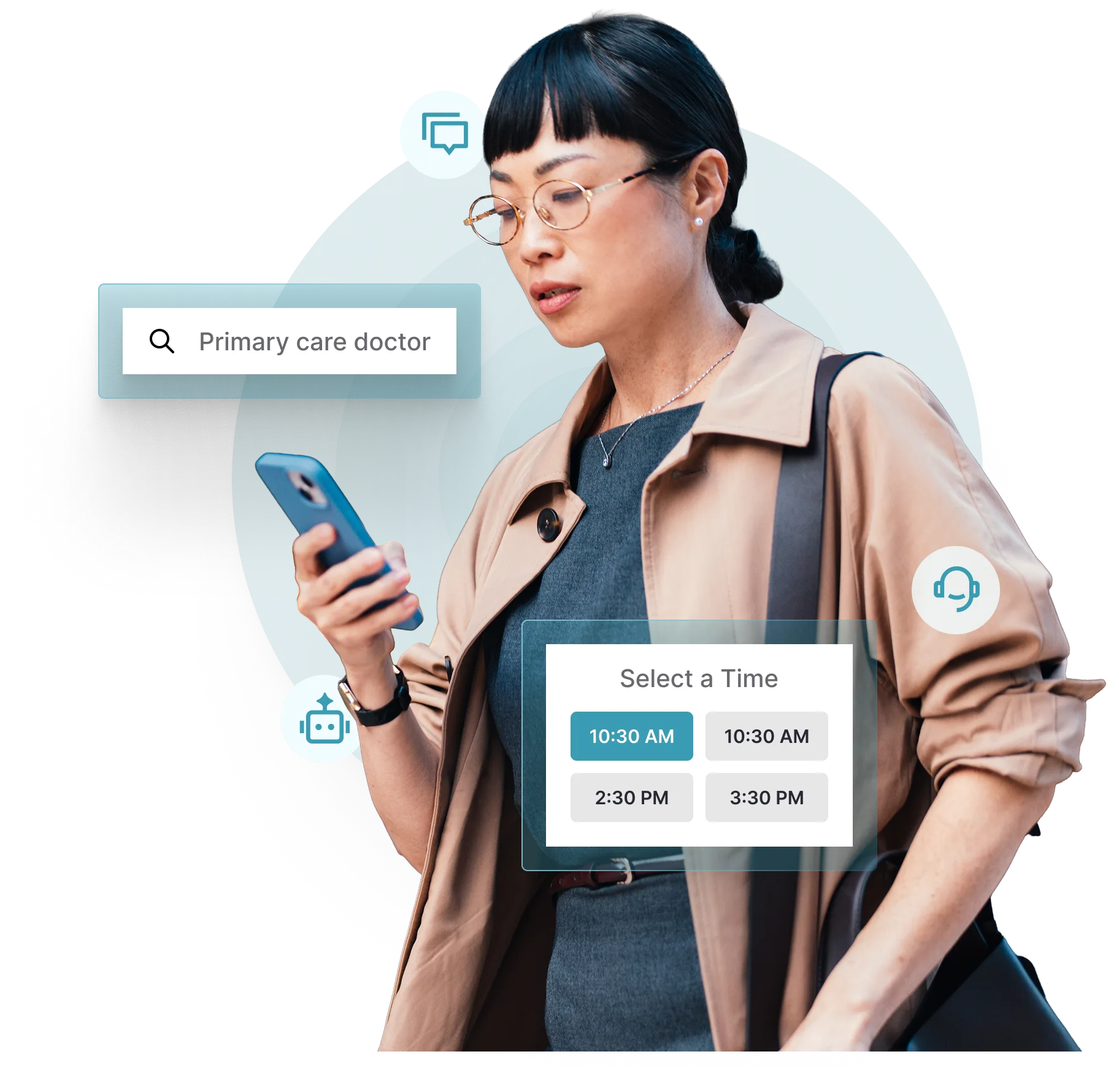
Site Search from DexCare gives total website search the makeover it deserves. It matches results using a built-in synonym library, so misspellings and synonyms return relevant answers. A search for “sore right knee” surfaces a list of providers who treat knee pain, based on the rules your system sets for where those patients should go. Results are ranked by real-time availability, and each result includes a bookable list of appointment times and dates. Patients can simply select the time that works best for them and enter the booking flow immediately, without having to log on to a patient portal.
Site Search empowers health systems to customize their patients’ digital experience. Website administrators get full control. They can choose which types of pages to surface, choose which results rank first, and tailor auto-suggest and auto-correct options to match how patients search for care. This allows health systems to make search results work for their goals, such as listing new providers looking to fill their panels first or promoting virtual options for low acuity care. Organizations can even create and embed a search widget on every website page, freeing search from its “upper-right corner” prison once and for all.
Beyond providers, Site Search allows health systems to customize all searchable content: pages, health articles, conditions, services, FAQs, events, news, PDFs, and locations can be enabled, ranked, and mapped to a health system’s unique web and content categories. Now, health systems have the freedom to shape the digital experience of every visitor.
See it running on your website
Ready to see how Site Search would work using your own providers and locations? You can, for free, no sales call required.
Just head to our interactive demo page and enter your website. We’ll build you a personalized, clickable environment — built on your providers and wrapped in your brand — within 24 hours. Once you get the link, you can start exploring.
See how total site search could work for your health system.